


Still at the Gate, 64 Years Later
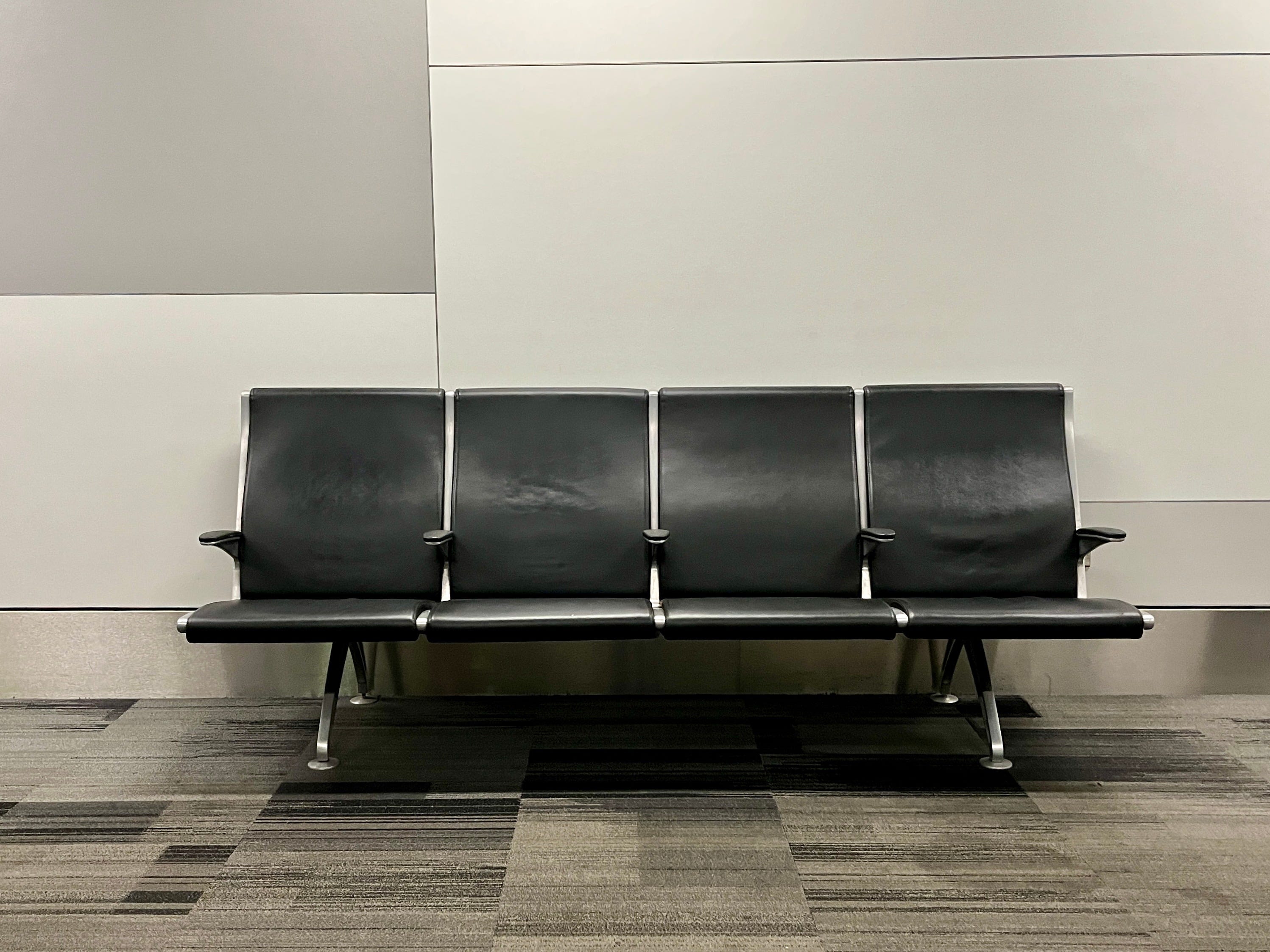
My flight was boarding at 6:15, so I got through security at SFO around 5 a.m. The airport was quickly filling up, but there were still plenty of empty seats. Without people occupying all of them, I began noticing the chairs themselves.
Much of the gate seating I saw was Charles and Ray Eames’ Tandem Sling Seating, designed in 1962. Sixty-four years later, the design still looks contemporary. More remarkable to me is that it is still being used for its original purpose.
This was in the new Harvey Milk Terminal 1. The chairs weren’t being displayed as important pieces of design. There were no signs explaining their history. They were simply the airport chairs.
Once I began looking, I noticed other mid-century designs around the terminal.
A few seating areas had Pierre Paulin’s bright orange Little Tulip chairs, designed in 1965. They were placed in pairs around small tables and clearly used as accents—perhaps even as deliberately retro accents.
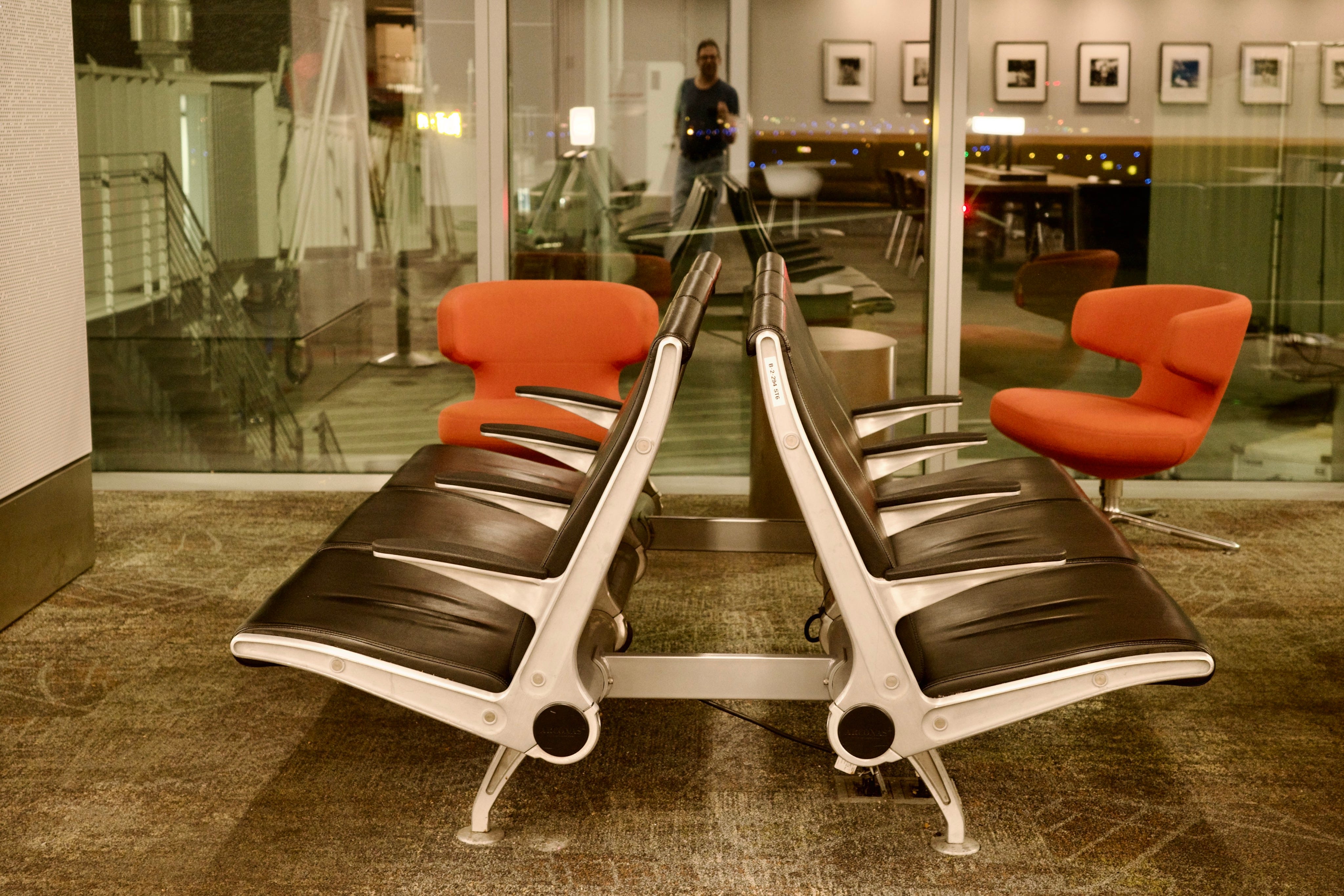
The Eames chairs were different. They weren’t accents, and they weren’t there to make a design statement. They were the airport’s everyday gate seating, quietly doing the same job they were designed to do in 1962.
That is what made them remarkable to me. No one was calling attention to their history. Most passengers probably didn’t notice them at all. Sixty-four years later, they were simply still at work.
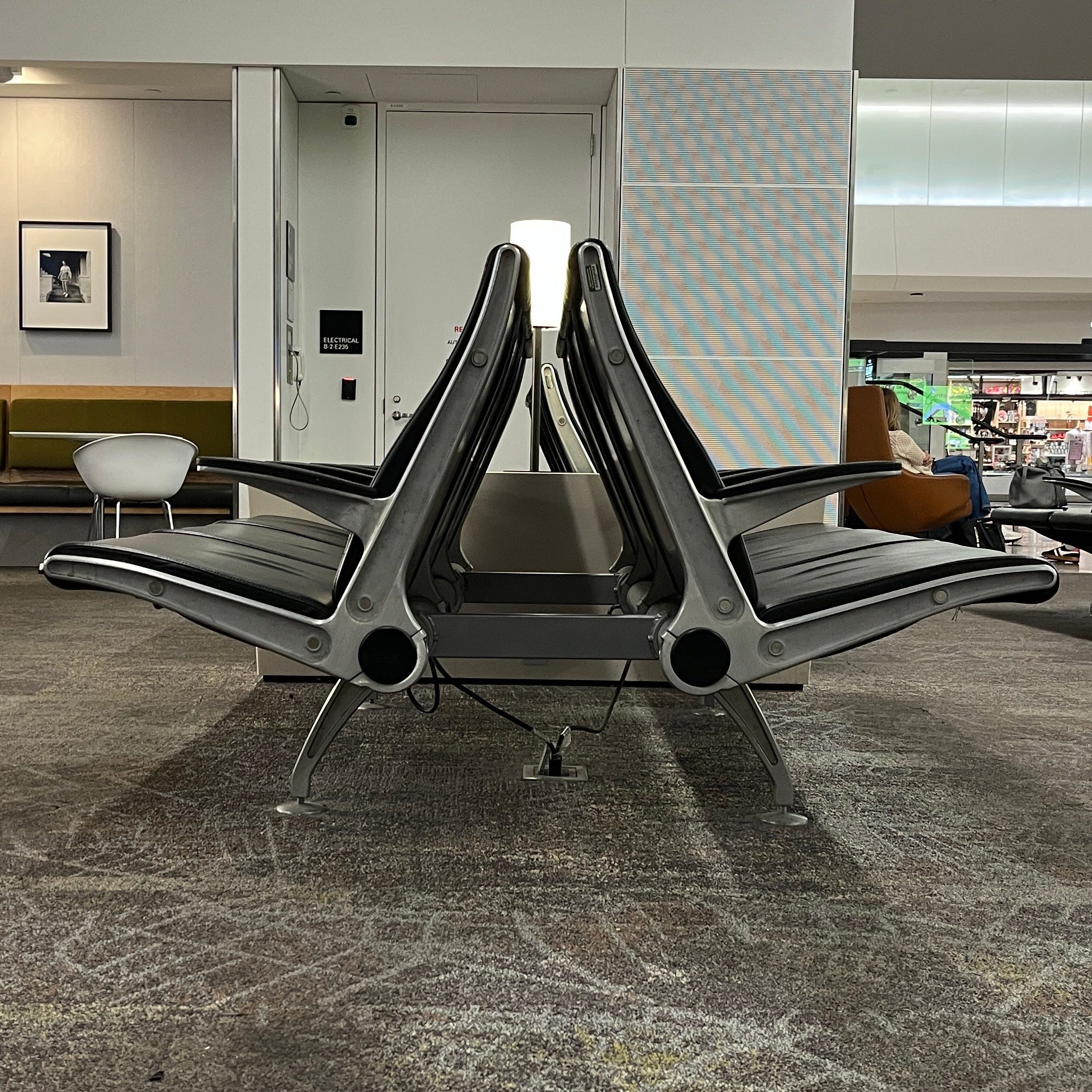
These particular chairs may be much newer than the design itself. But that is also part of what interests me. Someone furnishing a new airport terminal can still choose a design from 1962 and use it without making a show of its age.
The chairs made me wonder what the Eameses got right. The proportions? The materials? The ability to repeat the same unit across a large space? Or simply a form that continues to do its job without much fuss?
Comfort is open to debate. I know some people find these chairs uncomfortable, especially during a long wait. Lasting for 64 years doesn’t mean a design is perfect.
Still, there is something remarkable about a design remaining useful through decades of changes in travel and taste—and doing so without calling attention to itself.
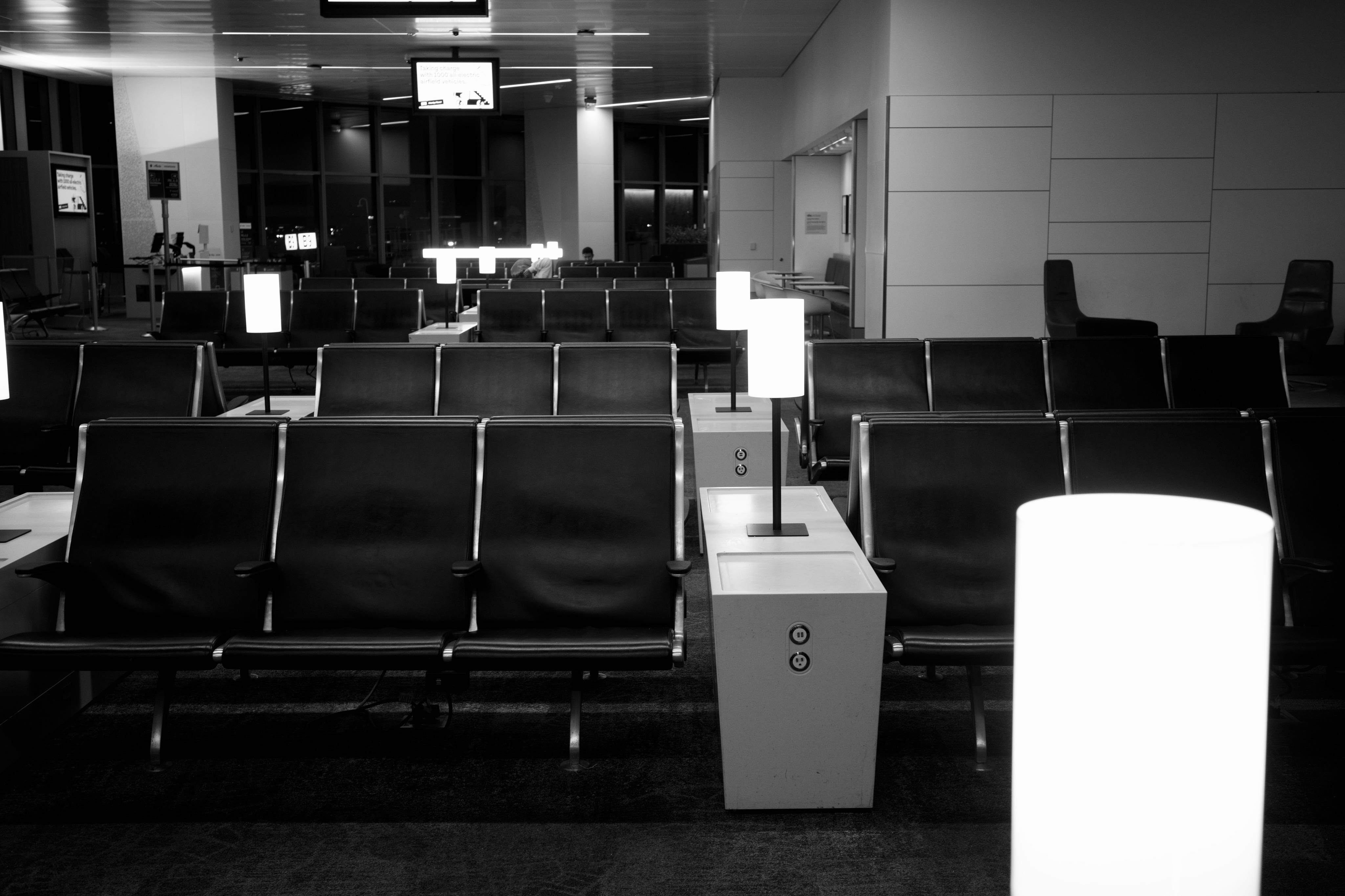
At 5 a.m., with a little space around them, I could finally see the chairs.

The fact that the Tulip chairs are only three years younger and they read as retro is wild. But context does matter. Even a familiar piece will look different exhibited in a white room with top lighting and a description tag.
Nice, the Eames chairs/benches have a simple elegance. They fit and they work! Nice to see, and nice photographs! The orange ones are close to the Swan. I would take the Swan, but in a pinch...